

The Importance of Sticking to a Routine When Working from Home: Why Getting Dressed in the Morning Matters, and Other Self-Care Tips for Beginner Remote Freelancers
Working from home can be a great way to have more control over your schedule and avoid the daily commute. However, letting yourself go can be easy if you're not careful. One of the easiest ways to address this is to get dressed in the morning, even if you don't plan to leave the house. A designated work clothes area can also help you stay organized and productive when working from home. However, this is just the beginning. This blog post offers tips for creating a remote work capsule wardrobe, maintaining a routine, and staying productive as a freelancer.
The Importance Of Getting Dressed In The Morning, Even When You Work From Home.
If you're one of the many of us working remotely, it's easy to let yourself go and become less productive if you're not careful. One of the best ways to avoid this trap is to get dressed in the morning, even if you don't plan to leave the house for your workday. This can help create structure and discipline while boosting your self-confidence and motivation.
Look Good, Feel Better!
The easiest way to do this is to have a uniform. A capsule wardrobe of work-appropriate clothing you feel confident in can significantly improve your productivity and motivation, especially when working from home. Whether it's a simple but stylish outfit or something more creative, the key is to pick pieces that inspire and energize you rather than drain your time or energy. Organizing clothing by color can help you put an outfit together fast. Depending on your industry, you can be as creative as possible. Despite not having to commute to a physical office, the last thing you want to do is look like you are wearing yesterday's workout clothes.
When dressing for the day, I tend to choose wrinkle-resistant, timeless pieces in a single color or a few neutral hues, interspersed with bolder shades. I usually wear mules or loafers to keep up with my energetic chihuahua dogter. If I run errands during the day, I don't have to worry about looking like I just rolled out of bed. My clothing also helps maintain a clear separation between work and leisure, allowing me to relax fully during my off hours. Mister Rogers had it all figured out!
My Daily Uniform
I need to be ready to go at any given time. Therefore, athleisure will not work. At the most basic level, it is a clean navy or white tee, with straight-leg jeans or linen trousers and neutral-toned sneakers. I can then add a knit blazer, cardigan, or light sweater. I feel incomplete without jewelry; aside from my wedding band, I need a necklace, earrings, a bracelet, or a watch.
What about hair and makeup? One of the things I pared down when I started working from home was my makeup. I only do a full beat for special occasions now. Otherwise, it's pretty basic: mascara, maybe some concealer, brow gel, and a tinted lip balm that doubles as blush. I'll add CC color-correcting cream as needed.
I have mid-length wavy hair, and most of the time it's in a hair clip or a braided ponytail. Heatless curlers are a godsend, and the only product that goes in my hair is an argan oil leave-in conditioner.
As for a handbag, anything with a strap that can hold my essentials with a cute scarf attached.

Creating YOUR Perfect Morning
This is the perfect opportunity to create your perfect morning. A good routine can improve your productivity and well-being, so why not start the day by taking a few minutes to get ready? This could include making a healthy breakfast, attending a Pilates or Yoga session before the workday, or getting dressed in clothes that make you feel confident and put-together. It's great to look at someone else's routine for inspiration, but make sure your routine is tailored to you; otherwise, you won't stick with it.
Rolling Right Out Of Bed Will Never Do You Any Favors, Whether Working From Home Or Not.
In the past, when I've just jumped out of bed and into the work frying pan, it really fucked me up for the rest of the day. You'll find that giving yourself a buffer to enjoy coffee, tea, or exercise before starting your workday can improve your focus and motivation. After all, taking care of yourself should be a priority no matter where you are or what type of work you do! It's okay to start slow. Only add activities to your routine that you enjoy and can do regularly. This is YOUR routine.

Progress NOT Perfection
It's easy to get distracted and stray from the schedule, but that won't help your productivity or well-being in the long run. Building good habits takes time and consistency, so don’t beat yourself up if it takes a while to get into the swing of things.
Remember, progress is better than perfection! Find what works for you and stick with it until something changes. There are no shortcuts here, but the results of a well-crafted routine are worth the effort. Sticking to a routine when working remotely doesn't have to be difficult or time-consuming — just a few small changes can make a huge difference in your productivity and motivation.
What A Typical Day Looks Like
The short answer: it varies. However, it does follow a somewhat repeatable pattern.
- Meditation, exercise, and breakfast before 8 am.
- Dinner before 7 pm.
- Bedtime before 10 pm.
- Take as many breaks as I need.
- Naps, snacks, talk to my plants, and cuddle with my husband on the couch.
As time allows, I'll throw in a load of laundry into the washer, go grocery shopping, and the like. If it takes less than five minutes to get it done, I do it right there and then. I also clean as I go. Once I call it a day, I like to do so.
By the way, this schedule is flexible, and it took constant testing and iteration to get to this point.
What about time blocking?
I actually suggest this to start. It's a great way to test if you're trying to stuff your schedule. If you see that you're keep "coloring outside of the lines," then it's time to adjust your expectations and schedule.
Creating A Functional And Organized Work Area
Another key to staying productive when working from home is maintaining a functional, organized work area. Finding the right furniture, setting up your workspace ergonomically, and investing in helpful accessories like lights and wall organizers can make all the difference.
If you're still using analog products, use trays, cups, and sorters. Everything is in its place and easy to access. Utilize the desk drawers. Keeping surfaces clutter-free helps you stay focused on the task, and keeping the right tools close at hand makes your workday easier. Don't overdo it, though. Work with what you already have.
What's On My Desk?
- Pop-up Post-it holder shaped like a handbag.
- Two pencil cups: one for pens and pencils, the other for scissors, a letter opener, and a few highlighters.
- Two small trays: one for self-care items like lotion, hand sanitizer, and room spray, the other is for jewelry.
- Small mail sorter.
Everything else lives in one of my three desk drawers. I don't have much in there since most of my work is “digital.” Still, it's always nice to have a small stapler, tape, some paper, and binder clips. The largest drawer has all of my labeled cords, Xbox controller, Wacom tablet, and a SuperDrive.
Other equipment and supplies are carefully organized in rolling carts. Yes, that's carts. I have one for music equipment, another for camera equipment, art supplies, and journals. They are easy to move around and hold just the right amount of stuff, which helps curb any late-night shopping sprees.
Don't have a dedicated room? Simple. Your kitchen table or a fold out tray will do. You can keep all of your office stuff in a backpack or tote. When you are done you put your office stuff away.
In a perfect world, every aspiring business owner could sprout an extra room in their home for work. This doesn't mean you can't improvise. The kitchen table can double as a temporary workspace. That's a given. I've seen people use folding picnic tables, bar carts, folding TV trays, and other items that are quick to set up and break down. If all of this feels like a lot, you can always go to your local coffee shop that isn't the ‘Bucks. Just make sure you're not that person who buys one latte for 10 hours of space and Wi-Fi.
Physical Vs. Digital Tools: Why Not Both?
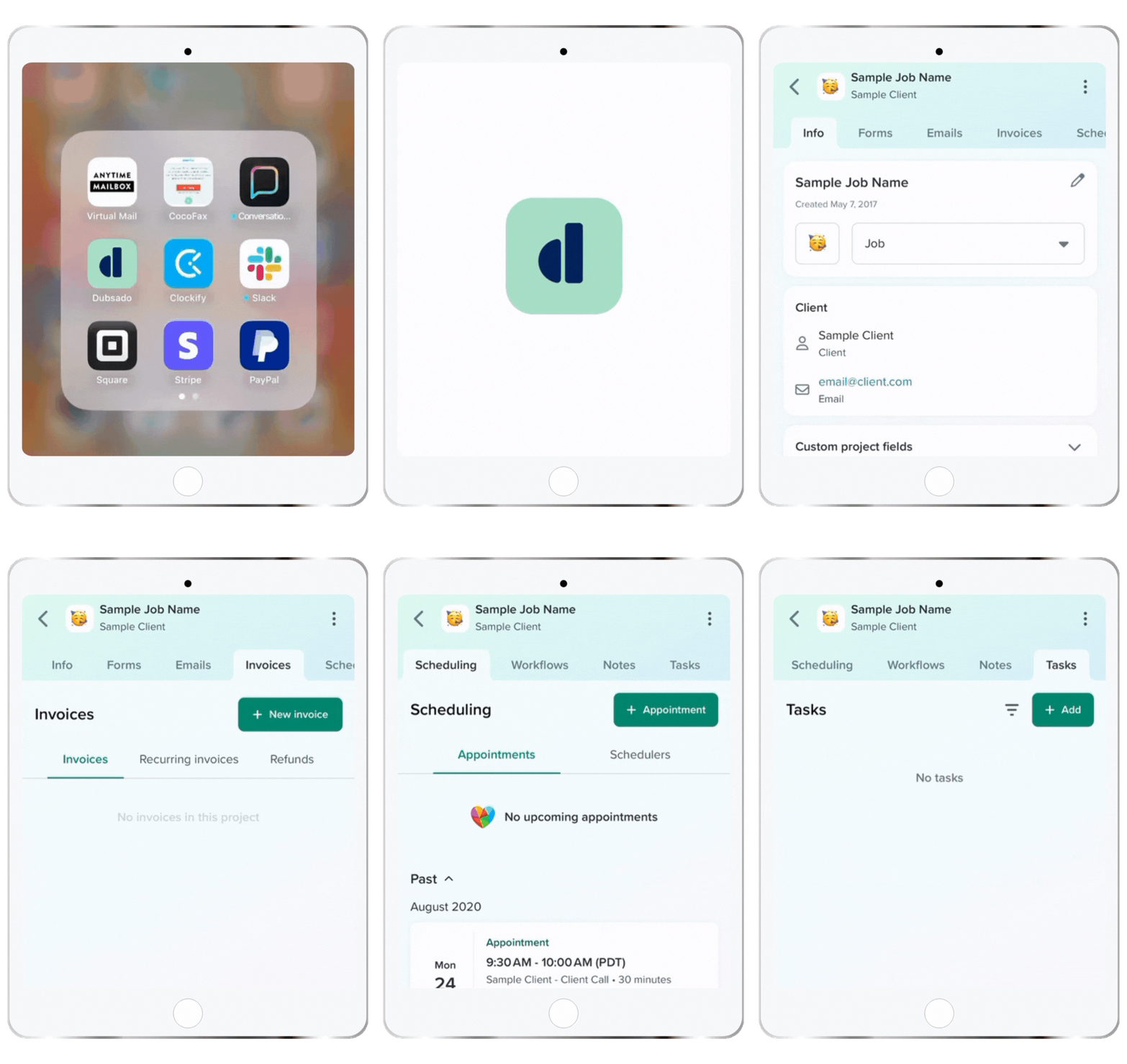
Physical tools can be great for organizing your workspace and providing structure for your workday. Paper calendars, planners, sticky notes, and whiteboards are all essential for staying on track with deadlines and tasks. On the other hand, digital tools can also be useful for getting organized. Apps like Notion and ClickUp can help you stay organized and keep track of tasks. Ultimately, it's up to you to decide which tools best suit your needs. Pick something to help you stay productive rather than take away from your work time!
Here's More Or Less What I Use

What's Functional For Me May Not Be Functional For You
Establishing an effective work area and system is key when working remotely, and remember that no two people’s systems will be the same. Have the courage to try out new tactics until you find what works best for you, but also take your time in this process – it requires patience!
To be productive, I need a dedicated workspace. Attempting to work at the kitchen table, on the couch, or even in bed proved futile; only when sitting at a desk do I feel in ‘work mode.' This also means that when I leave that space, I can be fully present with my family and friends—and speaking of family and friends.
Communication is Key: Setting Boundaries With Family and Friends
Whether it’s communicating your availability to talk or setting a “work zone” in certain areas of the house, it's important to set expectations so you and your family are aligned.
This is especially important if children are involved- they can sense when something isn't quite right and need reassurance that their parent is still around, even when they're busy with work. It goes without saying (but I'll say it anyway): don't be afraid to ask for help when you need it!
Here's What Helps Me
- I know it sounds simple, but closing and locking the door if you have a dedicated office. Add a visual marker if you're in an open space, like I am. Mine is a lightbulb that I control from my Stream Deck.
- Setting my devices to Do Not Disturb and only allow certain contacts to reach me. Example: Husband, Mother, and Mother-in-Law. That's it.
- Train people not to reach you during work hours unless it's an emergency. You may have to remind them a few times. Just be patient.
- …and just because someone texts you doesn't mean you need to respond immediately.
- Scheduling my work hours and making sure I stick to them. When I clock out, I'm not touching email or anything work-related. My dogter is waiting for me on the couch.

Keep a Positive Mindset and Celebrate Your Successes
It’s sometimes important to disconnect from technology and enjoy life – even for five minutes. Taking time to step away from work and relax can help you stay focused when you return. Nothing beats immersing myself in nature's beauty and feeling the warmth of the sun's rays on my face. The doggo agrees.
Challenge Your Outlook, But Don't Allow Toxic Optimism to Trap You
You can still face stress, anxiety, and frustration even when working from home. It is important to be mindful of your mental health and the impact these feelings may have on your work. Allow yourself to feel whatever you are feeling without judgment.
It's ok not to be “productive” all the time. Taking care of yourself and being kind to yourself is more important, especially when things are not going well. If something isn't going right, take a step back and reassess the situation. Remember, you are in control and can make changes to better suit your needs.
I make time for physical activity. When I start to feel overwhelmed, I get up and walk away. Even if it's just a short stroll around the block or some gentle yoga poses. Regular exercise helps boost focus, reduce stress, and increase productivity, but I do it more to break up the day and avoid feeling like I'm just working all day. I allow myself to feel what I feel when I feel it. You know yourself better than anyone else, so use your unique power to make changes that suit you.
Even the Smallest Victories Count
I have a saying, “Gimme all the wins!” Find the small wins throughout your day and celebrate them. Whether you're finishing a task or making progress on a particularly challenging one, these successes can help you stay motivated and positive.
Rewarding yourself when you reach a goal or complete a task is also important. That could mean buying a snack, coffee, or scheduling an evening out with friends. It helps create a healthy work-life balance and energizes you for your next task.
Every day is new, and every week can be a chance to restart. Celebrate the little wins, focus on what you've achieved, and don't forget to permit yourself to rest when needed. Make sure any energy expended is productive—not just busyness for busyness' sake. And if you need to, don't be afraid to ask for help.

Establish Your Boundaries and Put Yourself First
Yes, I saved the best for last. If you forget anything else from this blog post, remember this: establish your boundaries and put yourself first. No amount of money is worth sacrificing your integrity, mental health, physical well-being, and other values. It is important to define your availability for work and when you are not. Just as significant is establishing the boundaries of what behaviors and attitudes you won't accept from clients, colleagues, or partners.
Don't be afraid to ask for the credit or compensation you deserve, and don't put yourself in a position where you feel you need to sacrifice your well-being or mental health. Remember, it's okay to say no if something doesn't align with what you're looking for. Communicate your expectations honestly and openly, and don't be afraid to take a stand for what you believe in.
Be ready to walk away.
Recap
- Set a routine and stick to it, including getting dressed in the morning.
- Allow yourself to feel whatever emotions you are feeling without judgment.
- Take time for physical movement throughout the day and allow yourself to rest when needed.
- Celebrate your successes and reward yourself when you reach a goal or complete something.
- Establish your boundaries, and don't be afraid to ask for help.
- Ask for the credit or compensation you deserve, and don't put yourself in a position where you must sacrifice your well-being or mental health.
- Communicate expectations openly and honestly; don't be afraid to stand up for your beliefs.
- Make sure any energy expended is productive, not just busyness, for the sake of busyness.
- Reassess if something isn't going right, as you are in control and can make changes to better suit your needs.
- Be ready to walk away if something isn't right.
Conclusion
Working from home can be tricky, but you can make it work with a few carefully chosen habits and the right mindset. Sticking to a routine will help keep you focused, motivated, and productive — no matter your circumstances. Don’t forget: progress over perfection!
It’s also important to remember that not all routines are created equal. Freelancers must design a schedule that works best for them, enabling productivity without sacrificing self-care. Too often, freelancers run ragged—working long hours that do little to contribute to their careers. A good routine should be productive and restorative, allowing space for creative exploration and regular breaks throughout the day.

THIS SITE USES AFFILIATE LINKS. THERE’S NO EXTRA COST TO YOU, BUT I RECEIVE A SMALL COMMISSION WHEN YOU USE THEM.
PIN ME!


💁🏻♀️ Community Guidelines
To ensure a positive and respectful environment for everyone, please review our Community Guidelines. Following these guidelines helps us maintain a safe space for all.
🤖 TL;DR: Keep it cute or keep it on mute. 💅🏼